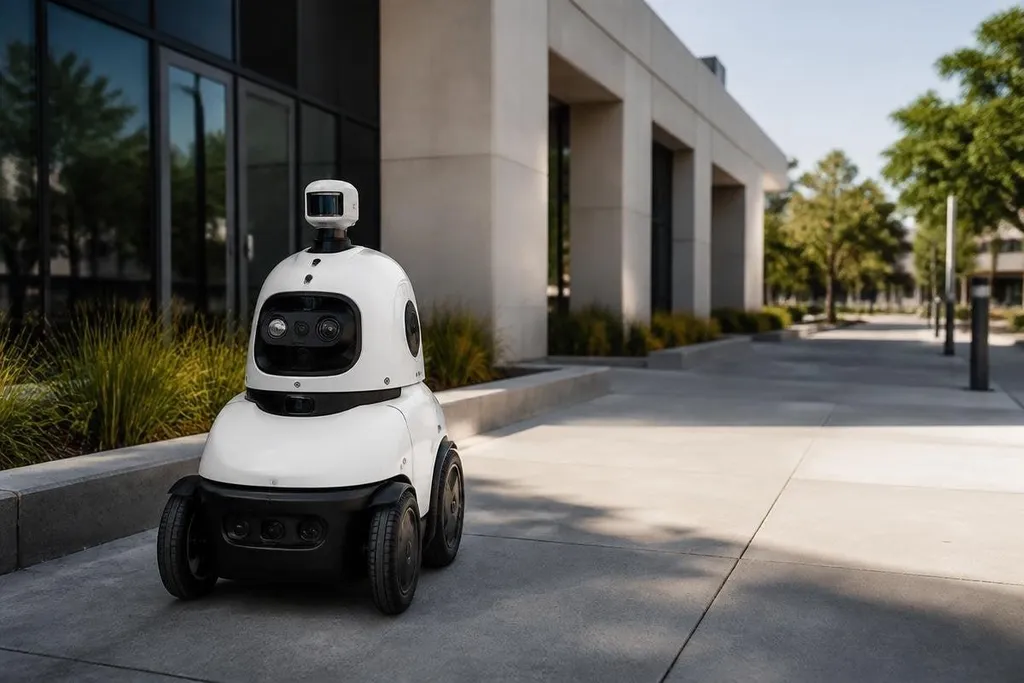
A surveillance robot can patrol, record video, detect movement, and send an alert. Those tasks sound clear until you ask for the numbers behind them. Without a named deployment, test method, or failure rate, a claimed advance is only a claim.
- The useful measure is fewer missed events, not more camera features.
- Autonomous patrols still need clear rules for alerts, privacy, and human control.
- Buyers should ask for test results in the places where the robot will operate.
Better sensing, with proof attached
The first area to watch is sensing. The system may combine visible-light cameras, thermal cameras, microphones, LiDAR, or other sensors to build a view of its surroundings. Each sensor helps with a different problem, but adding hardware does not prove that the system makes better decisions.
A useful report would show detection rates, false alarms, lighting conditions, weather, and the distance from the target. It should also say how the system handled people, animals, parked vehicles, shadows, and moving machinery. Those details tell you if the robot can support a security team or only produce more clips to review.
Thermal imaging can help when visible light is poor. LiDAR measures distance by sending out laser pulses, which can help a robot map walls and obstacles. Neither sensor explains what happened on its own. The software still has to separate a person from a reflection, a plastic sheet, or a warm machine.
Autonomous patrols need a clear job
A robot that follows a mapped route is useful only when the route matches the site. Doors may be closed, pallets may block an aisle, and outdoor ground may change after rain. A strong system should show how it stops, asks for help, or takes another safe route.
The important figures include patrol time, recharge time, network range, obstacle clearance, and the number of remote interventions during a shift. A vendor that reports only travel speed leaves out the number that affects staffing: how often a person must take control.
Patrol claims need a named site and date before they can guide a purchase. Surveillance robotics reporting from Robot24.com can put the route, sensor setup, and operator workload beside the result, so you can judge the machine against the place where it must work.
Its purpose should stay narrow. Watching a fence line, checking a warehouse after closing, and inspecting a construction site place different demands on sensors, mobility, and communications. One machine may handle one setting well and fail in another.
The part vendors still need to show
Privacy and safety belong in the same test plan as detection. A surveillance robot may record people who are not the subject of an investigation, so buyers need clear rules for storage, access, deletion, and human review.
The system should also show how it reacts when a person enters its path. Security matters on the network too. A camera feed, map, or alert can expose sensitive information if the robot has weak access controls.
A serious product report should name its encryption method, software update process, data retention period, and failure response. If those details are missing, the buyer cannot judge the full system.
The strongest claims will connect a machine to a measured result. For example, a site operator could report the patrol route, operating hours, alert count, missed events, remote interventions, and maintenance time across a defined test period. That evidence is more useful than a polished demonstration because it shows what happened after the robot left the showroom.
A buyer's evidence checklist
Use these questions before approving a trial:
- Name the task: What must the robot detect, record, or inspect?
- Set the test area: Which rooms, roads, fences, or outdoor surfaces are included?
- Count human help: How many times does an operator take control during a shift?
- Measure alerts: What share of alerts are useful, missed, or false?
- Check data rules: Where are video, maps, and access logs stored?
- Price the upkeep: What do batteries, sensors, software, and repairs cost?
I'd rank a robot with fewer features and published field results above one with a longer specification sheet. Surveillance work is judged after an alert, when a person needs enough evidence to act and enough control to correct the machine.
The next useful milestone is a public test that reports missed events, false alarms, human interventions, and operating cost for one complete patrol period. Until vendors publish those numbers, the biggest claim in surveillance robotics remains the one least supported by evidence.